What Is a Glass Bottle Neck Finish?
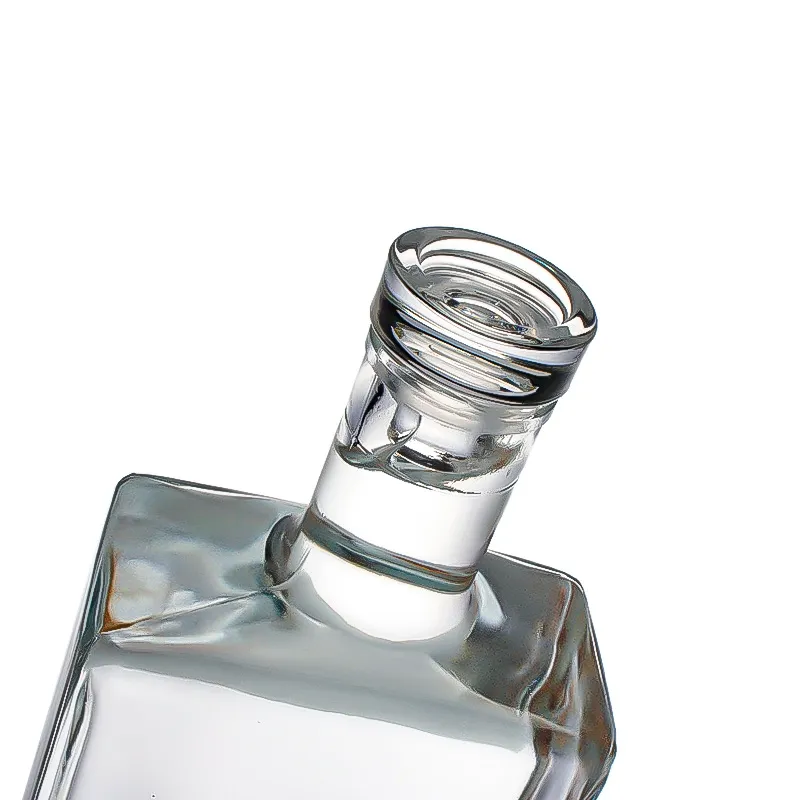
The neck is the narrower section of a glass bottle between the shoulder and the bottle opening.
The neck finish refers to the upper part of the bottle that is designed to work with a specific closure. Depending on the closure system, the finish may include threads, sealing surfaces or other features that allow the closure to fit and seal properly.
For example, a threaded bottle may use a screw cap, while a bottle with a ROPP/ROPE finish is designed for a compatible roll-on tamper-evident closure. A cork or T-top stopper uses a different type of neck geometry and relies heavily on the internal opening and stopper dimensions.
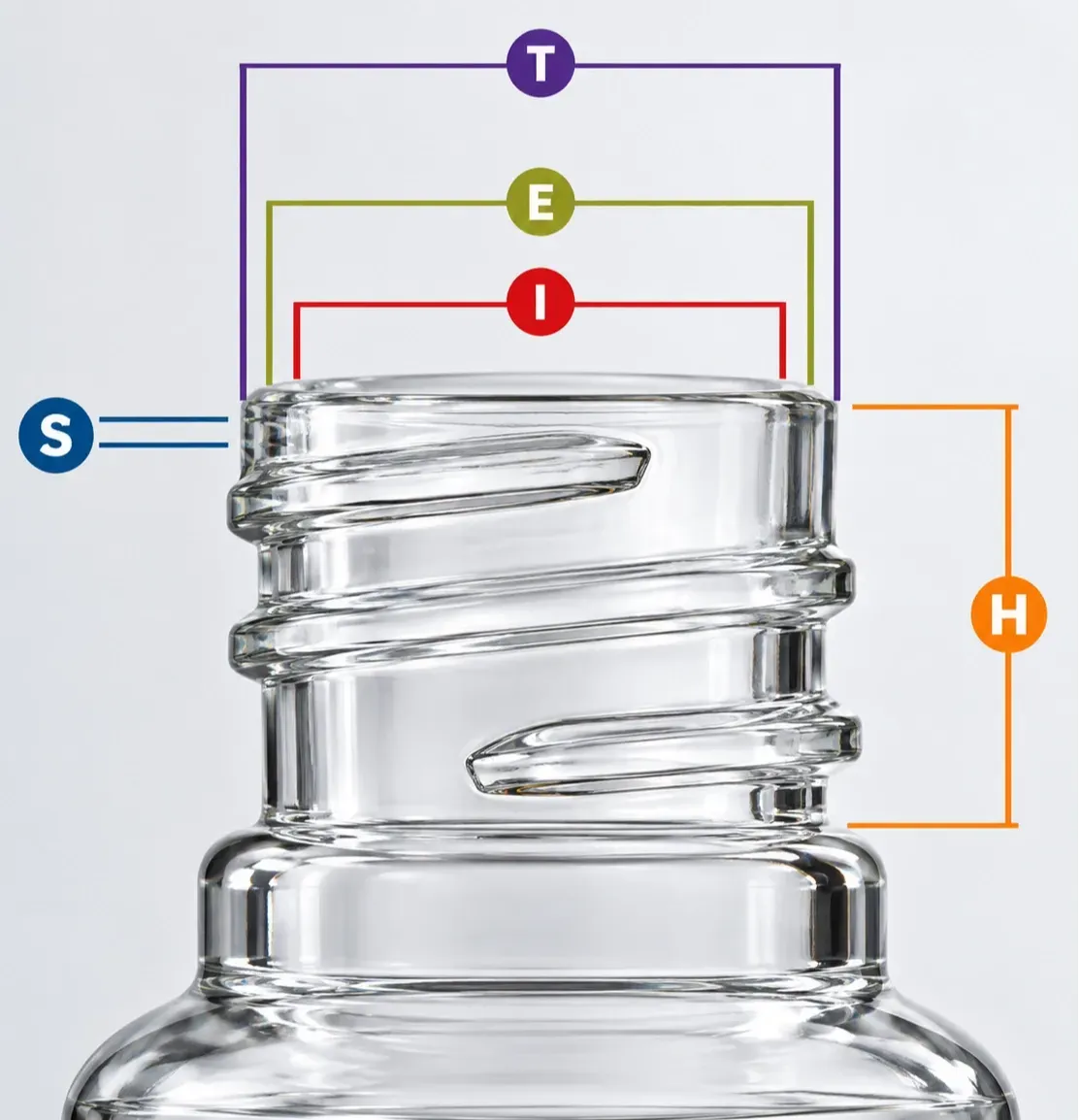
Industry neck-finish specifications can include dimensions such as the I, T, E, H and S dimensions, which help define the relationship between the bottle and its closure.
In other words, the bottle neck is not simply an opening. It is a functional part of the packaging system.
Why Is the Glass Bottle Neck Finish Important?
A bottle can have the correct capacity and an attractive design but still be unsuitable for your production line if the neck finish does not match the closure.
There are several reasons why neck finish selection matters.
1. Closure Compatibility
The neck finish must match the closure specification.
For example:
- Screw neck → compatible screw cap
- ROPP/ROPE finish → compatible ROPP/ROPE cap
- Cork finish → compatible cork or stopper
- T-top system → compatible stopper dimensions
A ROPP closure, for example, is specifically designed to work with a compatible ROPP/ROPE bottle finish and appropriate capping equipment.
2. Sealing Performance
The bottle neck and closure work together to create a seal.
If the dimensions are incorrect, the closure may be:
- too loose
- too tight
- difficult to apply
- difficult to remove
- unable to provide a reliable seal
For products such as spirits, wine, edible oil and beverages, proper sealing is essential for maintaining product integrity during transportation and storage.
3. Filling and Capping
The internal opening of the bottle neck can also affect the filling process.
For automated filling, the bottle neck needs to provide sufficient clearance for the filling equipment. The bottle and closure should therefore be evaluated together with the filling and capping equipment before mass production.
4. Production Cost
The neck finish should ideally be confirmed before the final bottle mold is manufactured.
If the closure specification changes after mold development, the bottle neck may need to be modified. Depending on the design, this can result in additional engineering work, mold modification or even a new mold.
For custom glass bottle projects, it is therefore better to finalize the bottle neck and closure system at the beginning of the project.
Common Types of Glass Bottle Neck Finishes
GPI Finish
GPI refers to finish specifications developed within the glass packaging industry to define bottle neck and closure dimensions.
GPI-style threaded finishes are commonly used with screw-type closures across various food, beverage and packaging applications.
The important point for buyers is that a GPI designation should not be treated simply as a bottle diameter. The complete finish specification determines how the bottle and closure interact.
When selecting a GPI finish, buyers should confirm:
- Finish diameter
- Thread specification
- Finish height
- Sealing surface
- Internal bore
- Closure specification
- Dimensional tolerances
For a custom bottle project, the supplier should review the complete neck-finish specification rather than selecting a closure based only on nominal diameter.
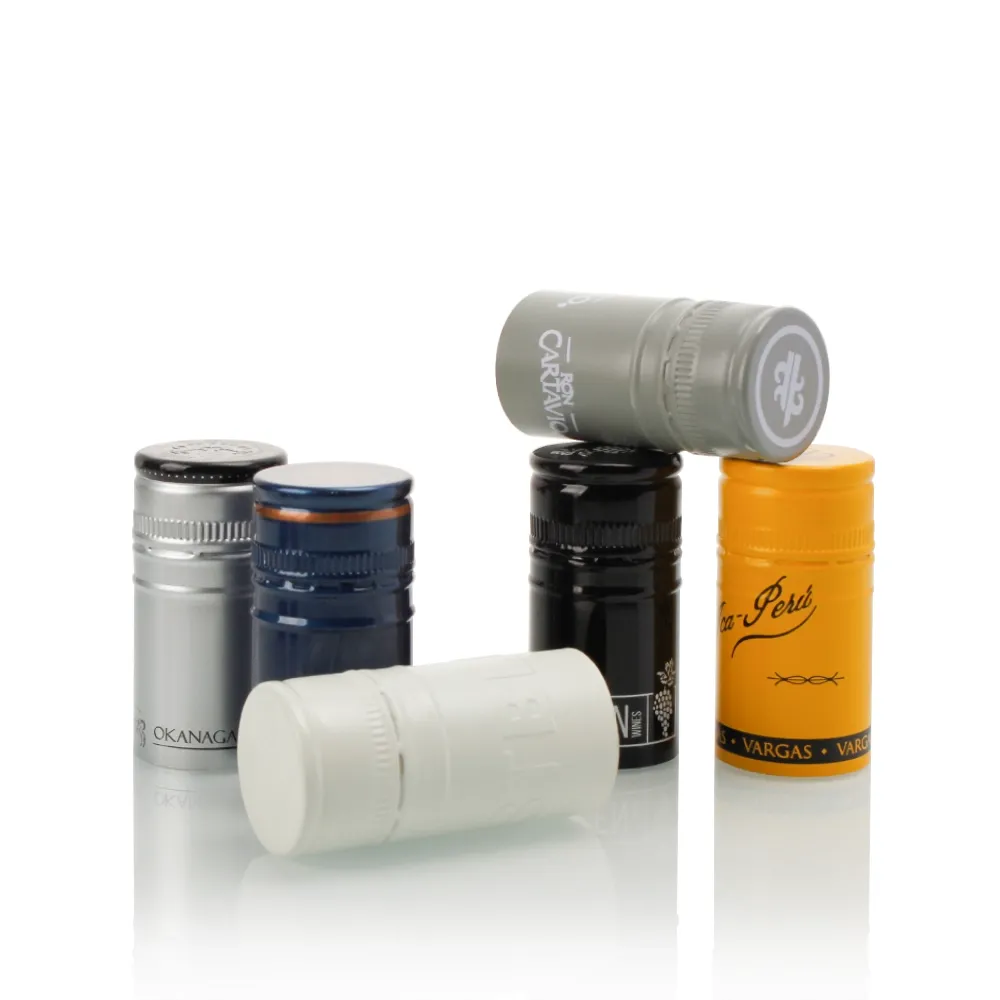
ROPP / ROPE Finish
ROPP stands for Roll-On Pilfer-Proof, while ROPE is commonly used for Roll-On Pilfer Evident terminology.
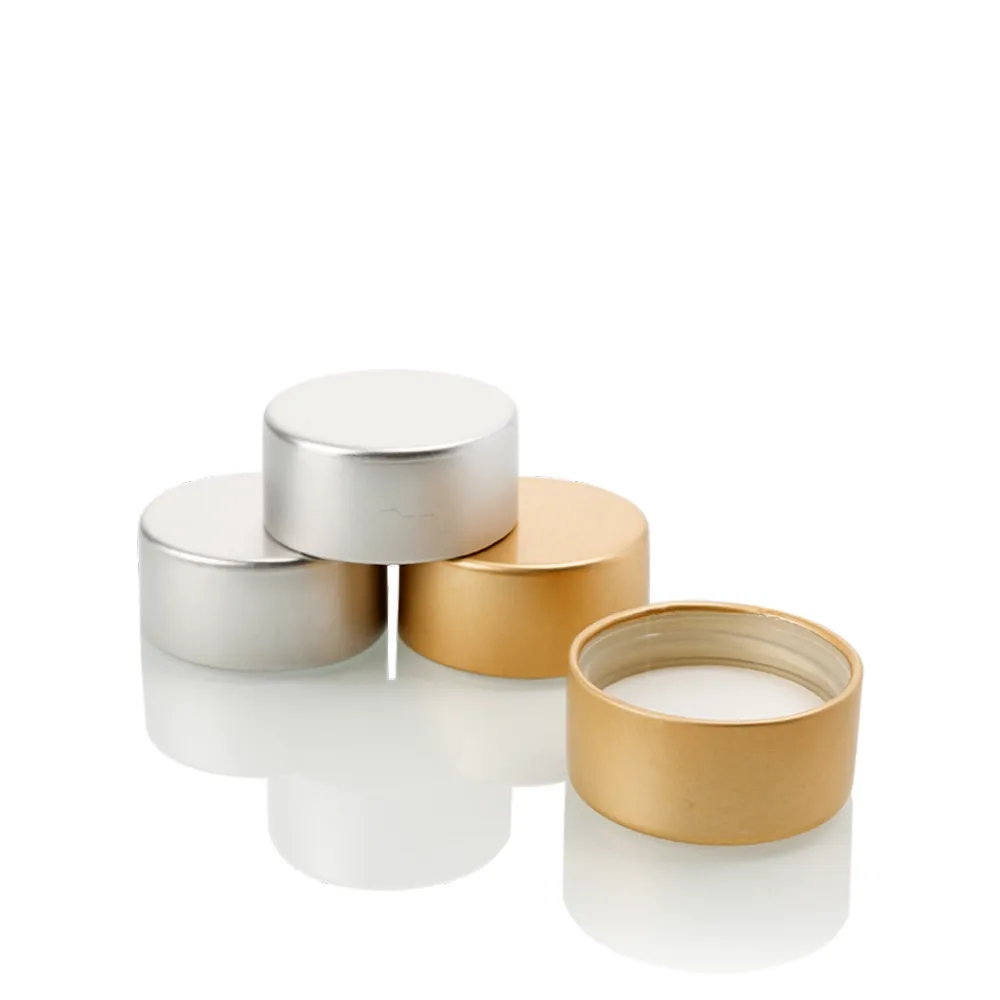
This system is widely used for bottles that are closed with aluminum roll-on caps. During the capping process, the closure is formed around the bottle finish to create the final closure profile and tamper-evident feature.
ROPP/ROPE finishes are commonly found on wine, spirits and other beverage bottles. Commercial bottle specifications show ROPP/ROPE/BVS finishes paired with compatible cap sizes, and suppliers specifically note that the bottle finish and ROPP closure need to match.
A typical ROPP system can be viewed as:
Glass Bottle → ROPP/ROPE Finish → Aluminum ROPP Cap → ROPP Capping Machine
The important consideration is that the cap should not be selected based only on its nominal diameter.
The following should be checked together:
- Bottle finish specification
- Cap specification
- Thread geometry
- Neck dimensions
- Capping equipment
- Required sealing performance
For example, a 750 ml bottle may use a ROPP finish, but the exact finish and cap specification still need to be confirmed before production.
Screw Neck Finish
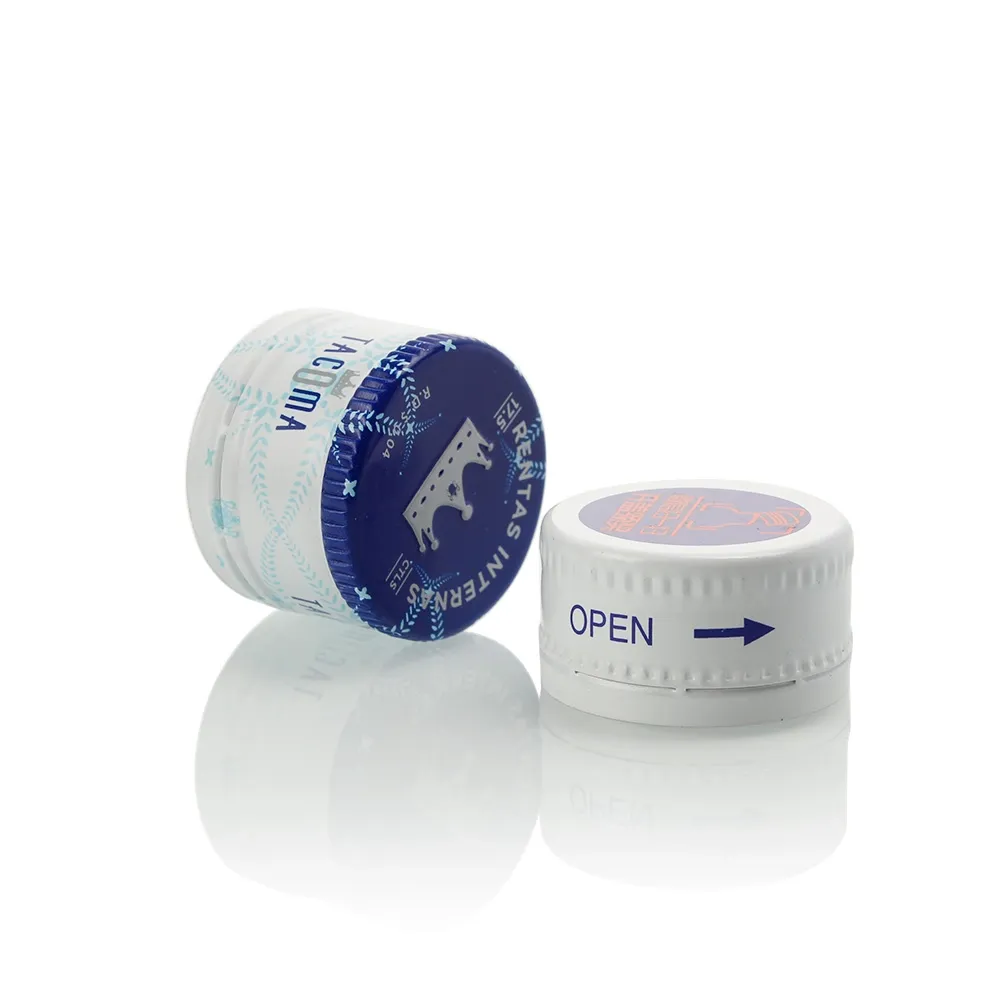
A screw neck uses molded threads on the bottle neck that engage with matching threads in the closure.
Screw closures are widely used because they can provide:
- Easy opening
- Resealing
- Convenient consumer use
- Compatibility with automated capping
- Flexible closure options
A screw neck can be used for products such as beverages, food products, edible oils and various liquid products.
When selecting a screw neck, buyers should consider more than the diameter.
Important specifications include:
- Neck diameter
- Thread specification
- Thread profile
- Thread height
- Finish height
- Sealing surface
- Internal diameter
- Closure dimensions
- Tolerance
For example, closure specifications may be expressed in formats such as 28-400 or 38-400. The first number generally relates to the nominal diameter, while the rest of the specification defines additional finish characteristics.
This is why two closures that appear similar in diameter may not necessarily be interchangeable.
Bar-Top Finish
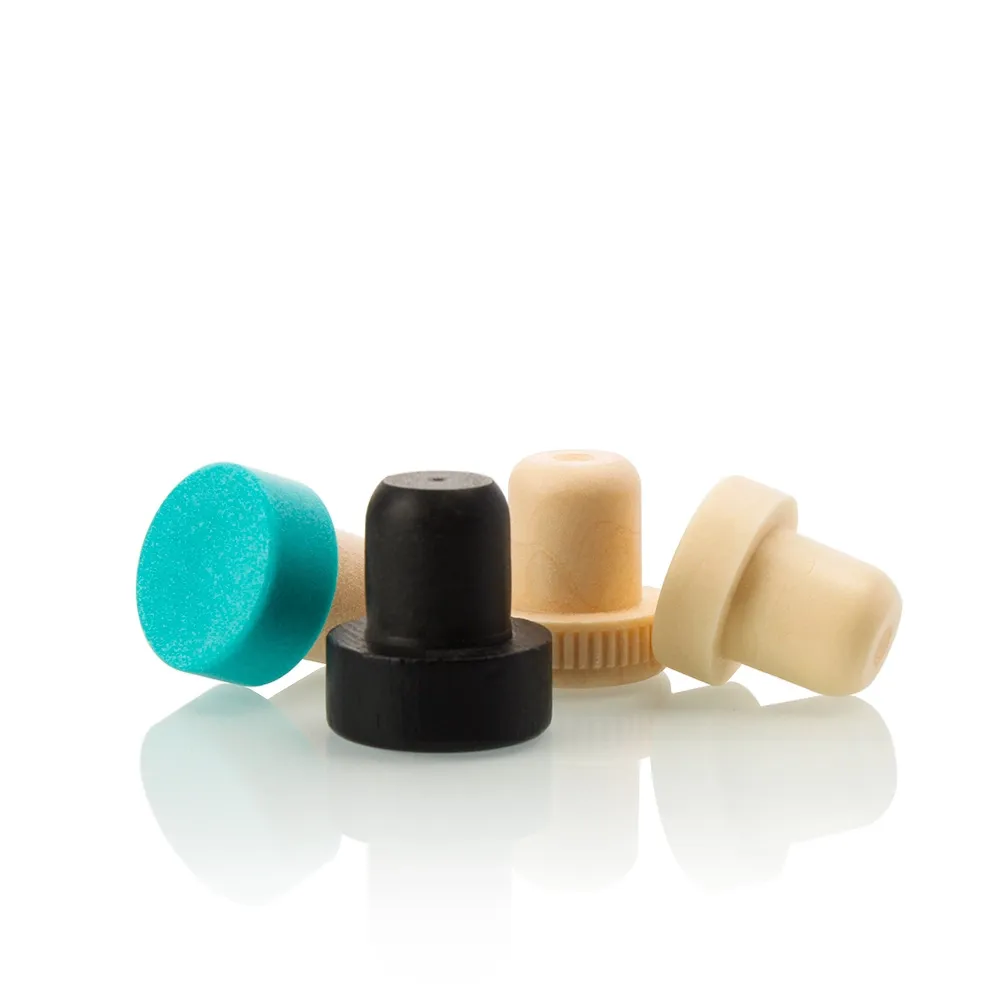
T-top or bar-top stoppers are widely used for premium spirits and specialty beverage packaging.
A typical T-top stopper consists of a stopper body inserted into the bottle neck and a decorative top that provides both functionality and visual appeal.
Unlike a conventional screw cap, the stopper does not depend primarily on external bottle threads.
Instead, the fit between the stopper and the internal bottle neck is critical.
Important specifications include:
- Bottle bore diameter
- Stopper diameter
- Stopper insertion depth
- Stopper material
- Stopper tolerance
- Retention force
- Sealing performance
For this reason, the T-top stopper and bottle neck should be developed as a matched system.
For your B2B project, this is also a good place to add an internal link:
Learn more about our [Bar-Top Bottle Stoppers].
Glass Bottle Neck Finish Dimensions You Should Understand
When communicating with a glass bottle manufacturer, simply saying “I need a 28 mm neck” may not provide enough information.
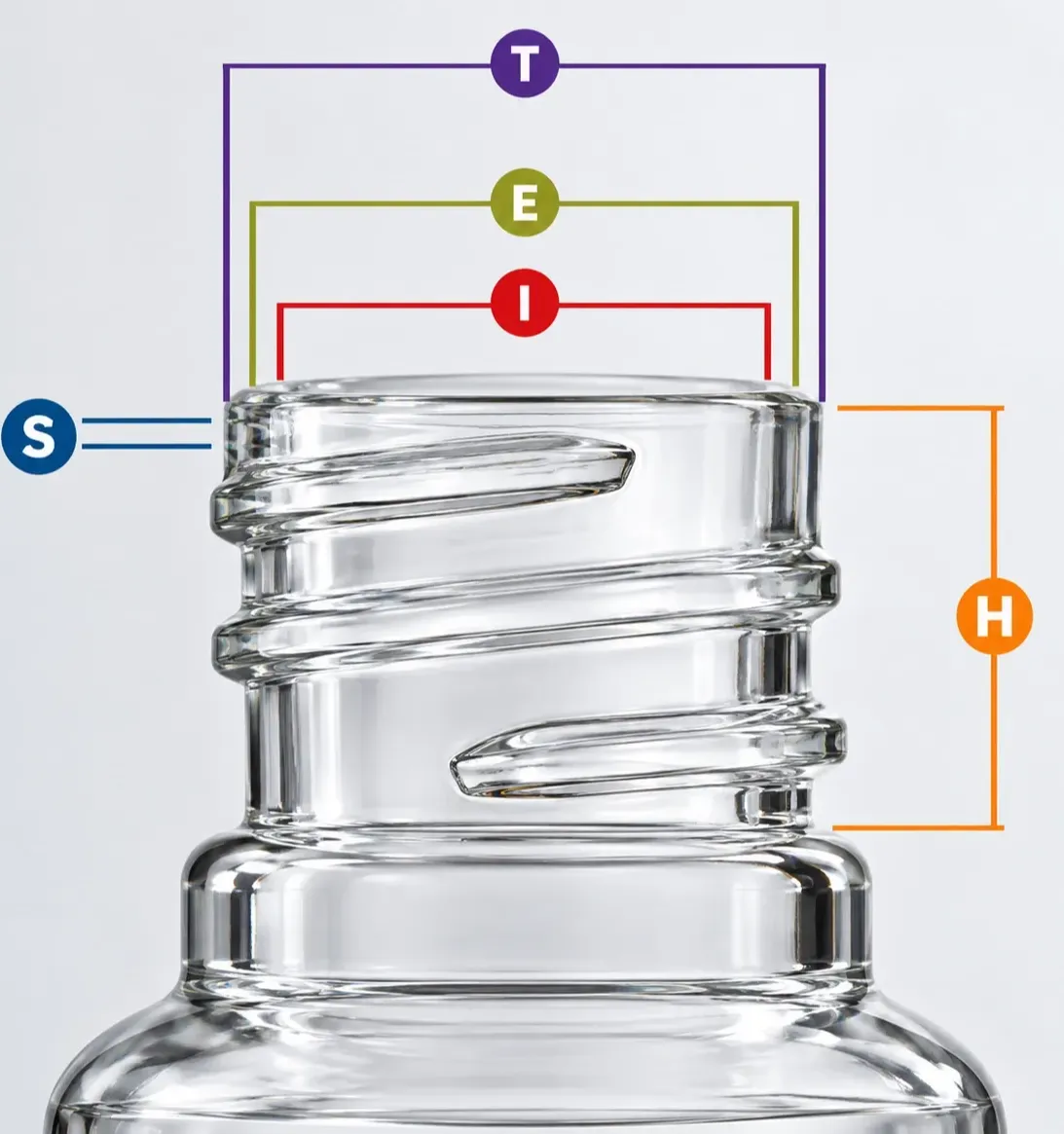
A proper neck-finish specification can include several dimensions.
I Dimension
The I dimension refers to the inner diameter of the bottle neck.
It is important for:
- Filling tube clearance
- Plug-style closures
- Stopper fit
- Internal sealing components
The I dimension is especially important for cork and T-top applications because the closure interacts directly with the inside of the bottle neck.
T Dimension
The T dimension generally refers to the outside diameter across the thread area.
It is one of the important dimensions used to establish the fit between a threaded bottle and its closure.
The tolerance of the T dimension can directly affect closure fit
E Dimension
The E dimension refers to the outside diameter of the bottle neck at the relevant finish area.
The relationship between the E and T dimensions helps define the thread depth.
H Dimension
The H dimension represents the height of the bottle finish.
It is measured from the top of the finish toward the bottle shoulder according to the applicable finish specification.
The H dimension can influence:
- Closure position
- Thread engagement
- Overall closure fit
- Capping performance
S Dimension
The S dimension helps define the position of the bottle thread relative to the sealing surface.
It can affect the orientation and thread engagement of the closure.
For technical bottle development, these dimensions should be taken from the applicable finish standard or technical drawing rather than estimated from a photograph.
Bottle Neck Finish vs. Bottle Closure: Why Compatibility Matters
One of the most important principles in glass bottle development is:
The bottle neck and closure should be treated as one packaging system.
For example:
Bottle Neck Finish --- Compatible Closure System --- Key Considerations
- GPI threaded finish --- Screw cap --- Thread and diameter
- ROPP/ROPE finish --- Aluminum ROPP cap --- Finish, cap and capping process
- Screw neck --- Screw cap --- Thread, sealing and tolerance
- Cork finish --- Cork / stopper --- Bore and stopper dimensions
- Bar-top/T-top system --- T-top stopper --- Bore, stopper diameter and retention
A commercially available glass bottle can illustrate this relationship clearly. For example, bottle specifications may list both the neck finish and compatible cap size, while ROPP bottle listings explicitly state that ROPP caps must be used with compatible ROPP finishes and capping equipment.
This is why buyers should avoid ordering bottles first and trying to find a closure afterward.
The safer approach is:
Bottle Design + Neck Finish + Closure + Filling/Capping Equipment
How to Choose the Right Glass Bottle Neck Finish
If you are developing a new glass bottle, the following process can help.
Step 1: Identify Your Product
First determine what the bottle will contain.
The product application can influence the preferred closure and sealing system.
Step 2: Select the Closure
Determine whether you want to use:
Screw cap
ROPP cap
T-top stopper
Other specialty closure
If you already have a closure, provide its technical drawing or a physical sample to the bottle manufacturer.
Step 3: Confirm the Neck Finish
Once the closure has been selected, determine the corresponding bottle neck finish.
For threaded closures, confirm the applicable finish specification.
For T-top or cork systems, confirm the required bore and stopper dimensions.
Step 4: Check Your Filling and Capping Equipment
If your bottles will be filled automatically, the neck dimensions should be reviewed against your filling equipment.
The same applies to:
- Screw capping machines
- ROPP capping machines
- Corking machines
- Stopper insertion equipment
A bottle that works manually may still require additional testing before being used on a high-speed production line.
Step 5: Test Samples Before Mass Production
Before approving the final bottle, test:
- Closure fit
- Sealing
- Leakage
- Opening and closing
- Capping
- Stopper insertion
- Bottle appearance
- Neck dimensions
- Production-line compatibility
For a custom bottle, sample approval should ideally take place before final mass production tooling is released.
Common Glass Bottle Neck Finish Problems
Incorrect neck-finish selection can cause several practical problems.
1. Bottle Leakage
Leakage can occur when the closure and bottle neck do not create the intended seal.
Possible causes include:
- Incorrect closure
- Dimensional mismatch
- Poor sealing surface
- Excessive dimensional variation
- Incorrect liner or sealing component
2. Loose Closure
A loose closure may indicate that the bottle finish and closure are not correctly matched.
For threaded closures, thread dimensions and tolerances are particularly important.
3. Difficult Capping
If the closure is difficult to apply, possible causes include:
- Incorrect thread specification
- Incorrect finish dimensions
- Closure deformation
- Excessive dimensional variation
- Incorrect capping settings
4. Stopper Fit Problems
For cork and T-top systems, the stopper may be:
- Too loose
- Too tight
- Difficult to insert
- Difficult to remove
- Insufficiently retained
This is why the stopper and bottle bore should be tested together.
5. Bottle Neck Damage
The bottle finish is a critical functional area.
Chips, cracks or dimensional problems around the neck can affect sealing and closure performance.
For a custom glass bottle project, neck-finish inspection should therefore be part of the overall quality-control process.
How to Order Custom Glass Bottles With the Right Neck Finish
When contacting a glass bottle manufacturer, providing complete information can significantly improve the development process.
Ideally, prepare the following:
1. Bottle Drawing
A technical drawing is preferred, especially for a custom bottle.
2. Neck Finish Specification
Provide the required neck finish if known.
3. Closure Information
Provide:
- Closure type
- Closure drawing
- Closure dimensions
- Closure supplier information, if available
4. Bottle Application
For example:
Premium whisky bottle
or
500 ml olive oil bottle
5. Filling Method
Specify whether the bottle will be:
Manually filled
Semi-automatically filled
Automatically filled
7. Capping Metho
Specify the expected capping or closing process.
7. Quantity
Provide your expected order quantity or annual volume.
8. Decoration Requirements
For example:
- Embossing
- Screen printing
- Spray coating
- Frosting
- Labeling
- Custom color
Providing this information early allows the bottle manufacturer to evaluate the complete packaging system rather than looking only at the bottle itself.
Frequently Asked Questions
A: What is a GPI bottle neck finish?
Q: A GPI finish is a standardized threaded glass container finish specification used to define the dimensions and geometry required for compatibility with a corresponding closure.
A: What is a ROPP bottle neck?
Q: A ROPP bottle neck is a finish designed for a roll-on pilfer-proof or roll-on tamper-evident closure. The bottle, cap and capping process need to be compatible.
A: What is the difference between ROPP and a screw neck?
Q: Both systems can use threaded closures, but ROPP closures are typically aluminum roll-on closures that are formed around the bottle finish during the capping process. A conventional screw cap is generally applied by engaging matching threads.
A: What is a T-top stopper?
Q: A T-top stopper combines a stopper body with a decorative top and is commonly used for premium spirits and specialty bottles. The stopper dimensions must match the internal bottle neck.
A: Can you manufacture a glass bottle to match my existing closure?
Q: Yes, a bottle manufacturer can evaluate an existing closure and develop or recommend a compatible bottle neck. Providing a closure drawing or physical sample can make the development process more accurate.
Conclusion
Choosing the right glass bottle neck finish is an important part of developing a reliable packaging system.
The bottle neck should not be considered separately from the closure. Whether you are using a GPI screw finish, ROPP/ROPE finish, conventional screw neck, cork finish or T-top/bar-top stopper, the bottle and closure need to be compatible in terms of dimensions, sealing, application and production equipment.
For custom glass bottle projects, it is especially important to confirm the neck finish before finalizing the bottle mold.
A good starting point is to provide your bottle capacity, design, closure requirements, neck dimensions, filling method and target quantity to your glass bottle supplier.
Need a custom glass bottle with a specific neck finish?
BottlePackSolutions can support custom glass bottle development based on your bottle design, neck-finish requirements and closure specifications. For projects requiring a complete packaging solution, compatible stoppers, caps and other bottle accessories can also be developed alongside the bottle.
Request a Quote for Your Custom Glass Bottle Project →


