
What Are Glass Bottles Made Of?
Modern glass bottle production typically involves mixing silica sand, soda ash, limestone, and recycled glass cullet according to a specific formulation before feeding the mixture into a furnace.
The following table shows the main function of each raw material:
- Raw Material --- Main Function
- Silica Sand --- Main glass-forming material
- Soda Ash --- Helps lower melting temperature
- Limestone --- Improves glass stability
- Recycled Cullet --- Supports melting efficiency and recycling
- Colorants --- Create specific glass colors
Glass Bottle Manufacturing Process Step by Step
1. Raw Material Preparation and Batching
The glass bottle manufacturing process begins with the preparation and batching of raw materials. Silica sand, soda ash, limestone, recycled glass cullet, and other ingredients are accurately weighed and mixed according to the required glass composition.
2. Melting the Glass
The prepared batch is fed into a glass melting furnace, where it is heated to a very high temperature approximately 1,500–1,600°C until the raw materials become molten glass.
3. Refining and Conditioning
After melting, the molten glass still contains dissolved gases and small bubbles, and its temperature may not yet be uniform enough for forming. The glass therefore goes through a refining and conditioning stage before it reaches the forming equipment.
During this stage, several important processes take place:
- Remove bubbles: The molten glass is refined to reduce and remove gas bubbles that could affect the appearance and quality of the finished bottle.
- Homogenize the glass: The molten glass is mixed and homogenized to achieve a consistent chemical composition throughout the melt.
- Stabilize the temperature: The temperature is carefully controlled and gradually adjusted to create the right viscosity for forming.
- Prepare the glass for forming: Once the glass is sufficiently refined, homogeneous, and thermally stable, it is ready to be divided into precise portions called gobs for bottle forming.
Before forming, the molten glass is conditioned to achieve a stable and uniform temperature, ensuring that each gob has consistent viscosity and weight. The conditioned glass then flows through the forehearth, where its temperature is further controlled before being cut into gobs and delivered to the forming machine.
Why is this step important?
Proper refining and conditioning help reduce defects such as bubbles, stones, cords, and uneven glass distribution. More importantly, consistent temperature and viscosity allow the forming machine to produce bottles with stable dimensions, wall thickness, and overall quality.
4. Gob Formation and Feeding
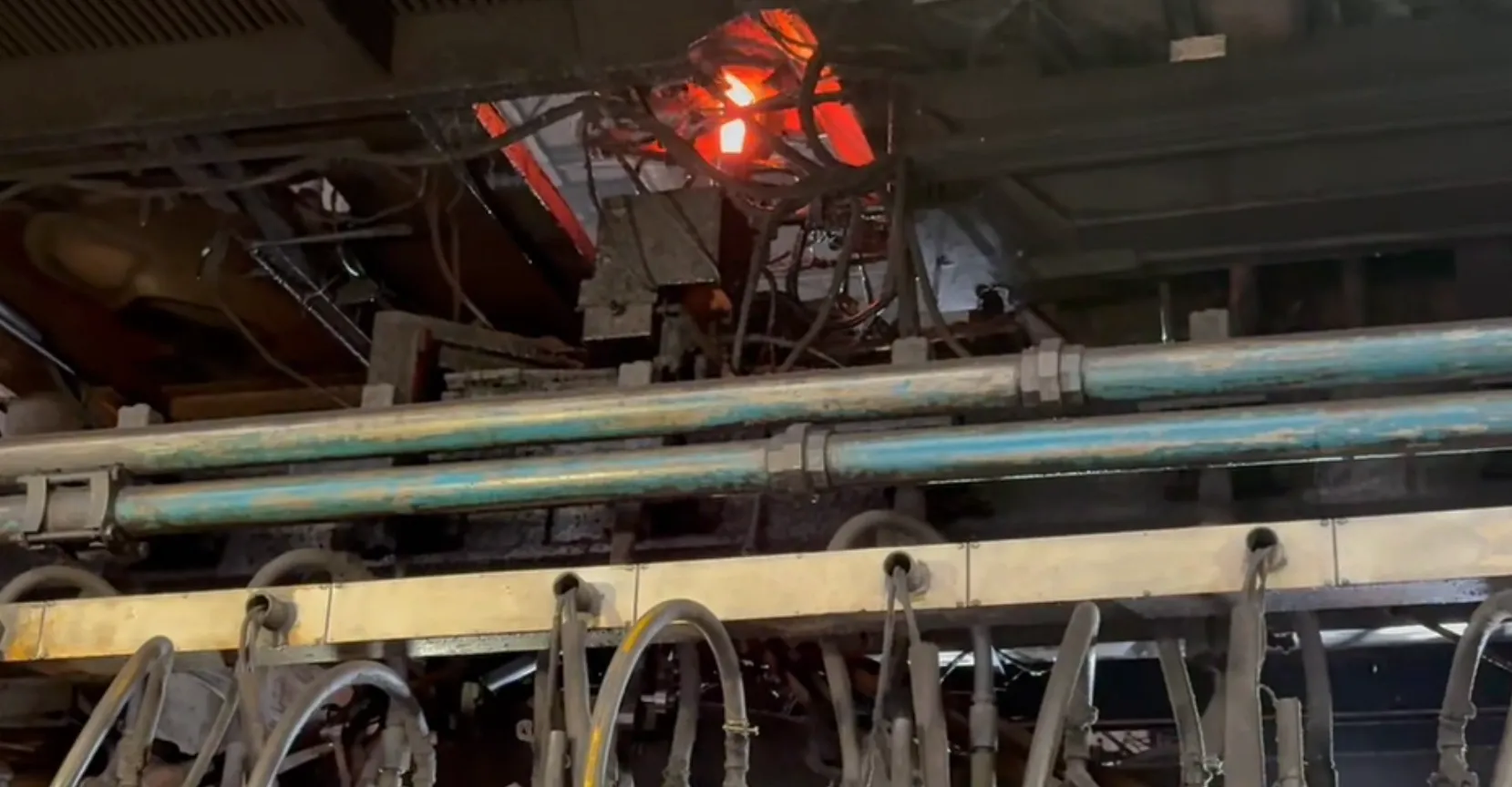
Once the molten glass has been refined and conditioned, it is ready for forming. The glass flows through the forehearth and is cut into precisely controlled portions called gobs. Each gob is then transferred to a forming machine, where it is shaped into an individual glass bottle.
What is a glass gob?
A glass gob is a precisely measured portion of molten glass used to form one glass container.
The forming process typically involves two stages: blank forming and final forming. The gob first enters a blank mold, where it is shaped into a preliminary form called a parison. The parison is then transferred to the final mold, where compressed air or a combination of pressing and blowing shapes the glass against the mold cavity.
5. Bottle Forming and Molding
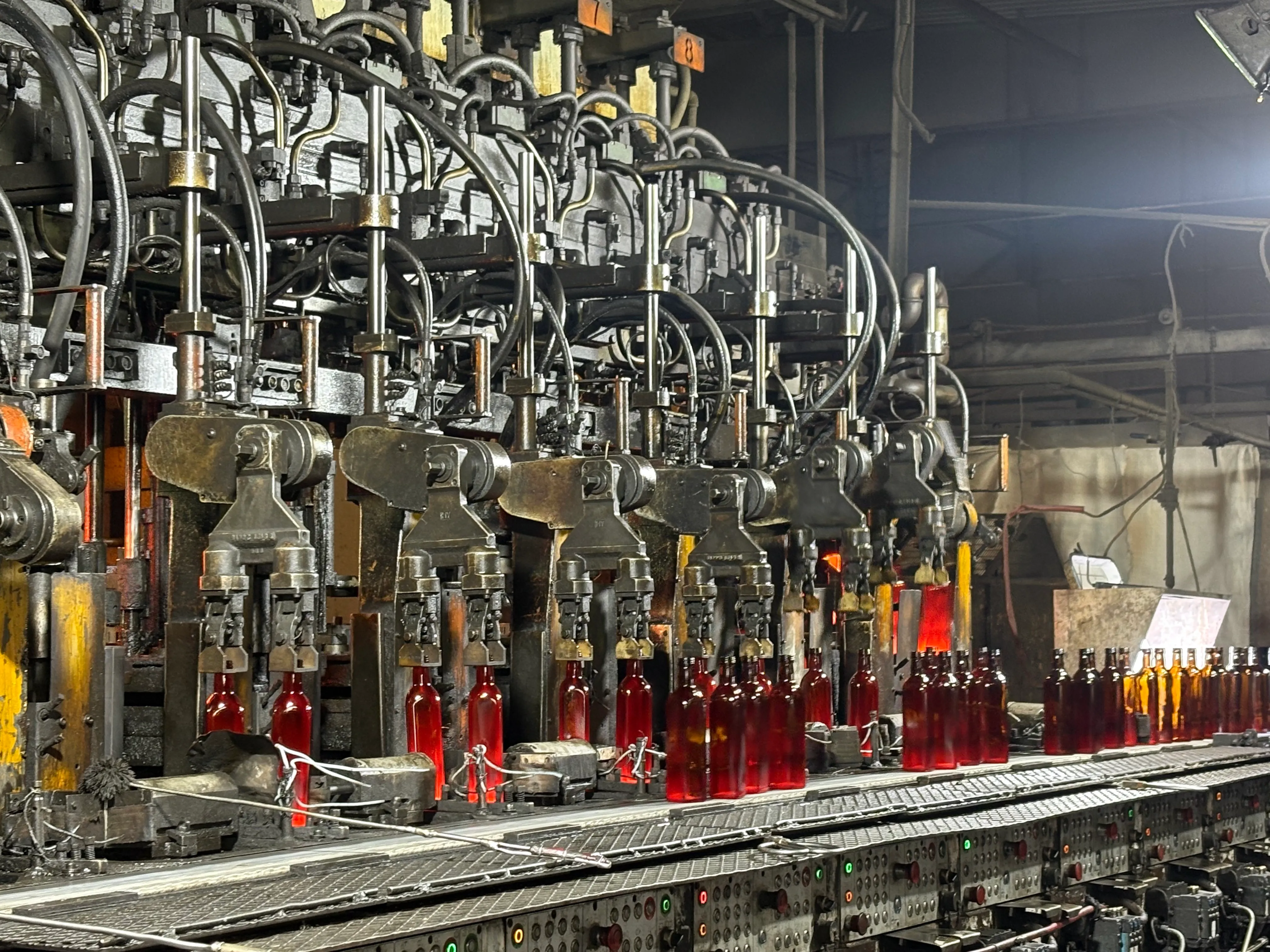
The two most common forming methods for glass containers are blow-and-blow and press-and-blow.
Blow-and-Blow Process
The blow-and-blow process is widely used for narrow-neck glass bottles. It uses compressed air to form the glass during both the blank and final forming stages.
A typical sequence is:
Molten Gob → Blank Mold → Parison → Final Mold → Finished Bottle
This process is commonly used for:
- Narrow-neck bottles
- Liquor bottles
- Wine bottles
- Spirits bottles
- Many beverage bottles
During the first blow, the gob is transformed into a parison with the basic shape and neck finish. The parison is then transferred to the final mold, where a second blowing operation expands the glass until it conforms to the shape of the mold.
Press-and-Blow Process
The press-and-blow process uses a metal plunger to form the initial parison rather than relying primarily on air pressure. The preform is then blown into the final mold to achieve the desired container shape.
This process is particularly suitable for:
- Wide-mouth containers
- Glass jars
- Food containers
- Certain heavier glass containers
Press-and-blow forming can provide greater control over the initial glass distribution, which can be useful when producing containers with specific weight, wall-thickness, or structural requirements.
How Forming Affects Bottle Quality
The choice of forming process has a direct impact on the final characteristics of a glass bottle. During forming, manufacturers need to carefully control the gob weight, glass temperature, forming time, air pressure, and mold design.
These factors influence:
- Glass weight and distribution
- Wall thickness
- Neck and finish dimensions
- Bottle shape and symmetry
- Dimensional consistency
- Mechanical strength
- Overall appearance
For custom glass bottles, the mold design is especially important. The mold determines the bottle's basic geometry, while the forming process determines how the molten glass fills and distributes itself within that geometry. Proper coordination between bottle design, mold engineering, glass temperature, and forming parameters is therefore essential for achieving consistent production results.
6. Annealing and Stress Relief
After forming, newly produced glass bottles are still at a very high temperature and contain residual thermal stresses created during the forming process. If these stresses are not properly relieved, the bottles may become more susceptible to cracking or breaking during subsequent handling, transportation, filling, or use.
To reduce these stresses, the bottles pass through an annealing lehr, a specialized temperature-controlled cooling system designed specifically for glass containers.
During annealing, the bottles are gradually cooled under controlled conditions. This allows the temperature to become more uniform throughout the glass and gives the material enough time to release internal stresses without creating new thermal shock.
Why Is Annealing Important for Glass Bottles?
Proper annealing contributes to the mechanical stability and reliability of glass bottles. It is particularly important for bottles that will undergo transportation, automated filling, capping, labeling, and repeated handling.
7. Glass Bottle Inspection and Quality Control
Once the glass bottles have been annealed and cooled, they go through a series of inspection and quality control procedures to ensure that they meet the required specifications and quality standards.
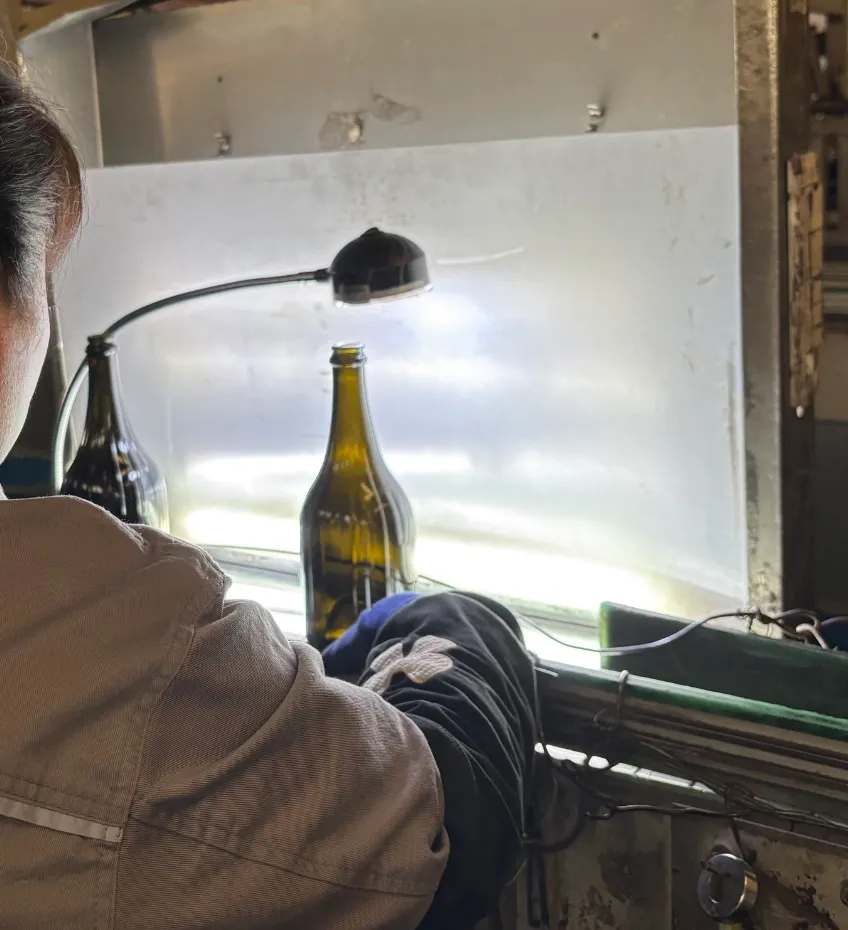
Glass bottle inspection typically combines automated inspection systems, measuring equipment, and manual visual inspection. The exact inspection requirements depend on the bottle design, glass type, intended application, and customer specifications.
What Is Checked During Glass Bottle Inspection?
- Inspection Item --- What Is Checked
- Appearance --- Cracks, bubbles, stones, scratches, surface defects, and other visible imperfections
- Dimensions --- Bottle height, diameter, body dimensions, and other critical measurements
- Neck Finish --- Mouth diameter, thread or finish dimensions, sealing surface, and neck alignment
- Weight --- Bottle weight and consistency between individual bottles
- Wall Thickness --- Glass distribution and consistency throughout the bottle
- Capacity --- Nominal and actual filling capacity
- Verticality --- Whether the bottle stands properly and meets verticality requirements
- Strength --- Resistance to pressure, impact, or other application-specific requirements
Automated Glass Bottle Inspection
Modern glass manufacturing lines can use automated inspection systems to detect certain defects and dimensional variations at high production speeds. Depending on the production line and inspection requirements, these systems may check areas such as the bottle mouth, dimensions, wall distribution, sidewall defects, and overall appearance.
Manual Inspection and Quality Control
Visual inspection and manual sampling remain important parts of glass bottle quality control. Trained quality control personnel may inspect samples from production batches and verify critical specifications using calibrated measuring equipment.
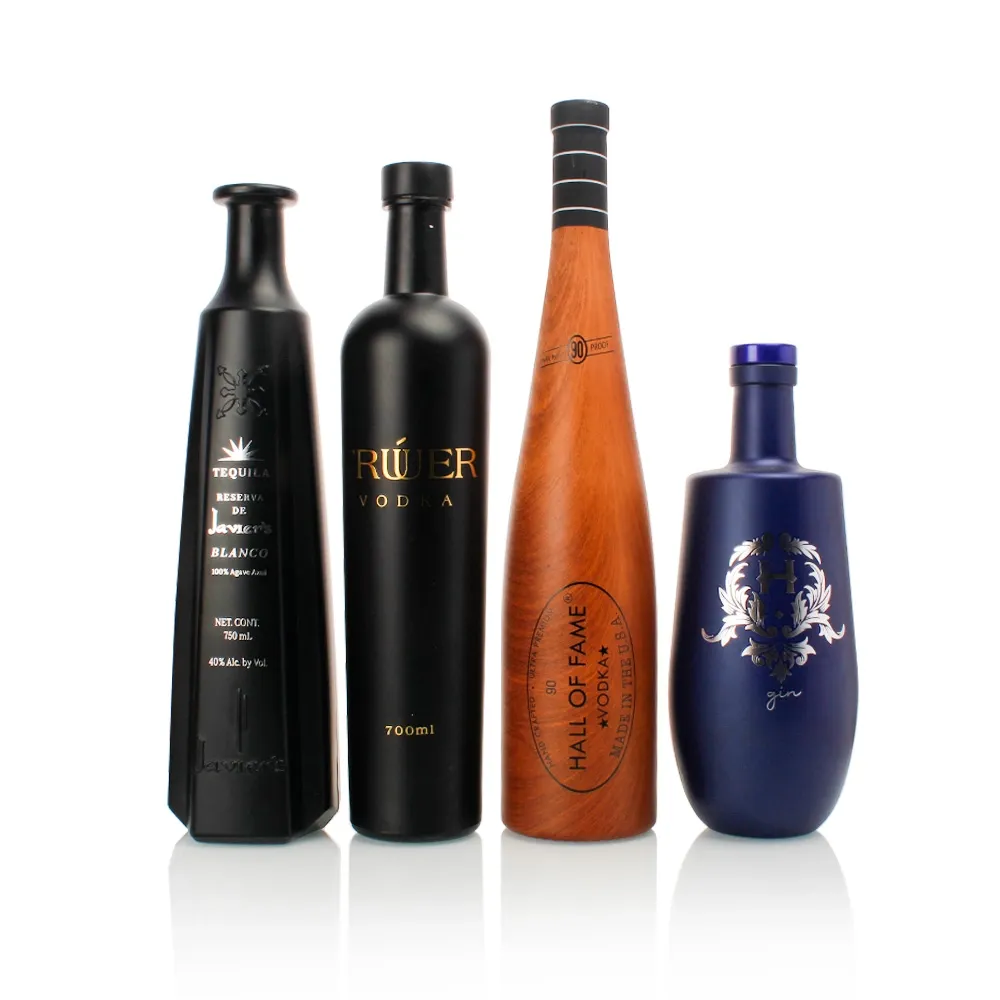
8. Decoration and Surface Treatment
After inspection, glass bottles can undergo secondary processing according to the customer's design requirements.
How Are Custom Glass Bottles Manufactured
Standard bottles can often be selected from existing molds, while a completely new bottle design may require a custom manufacturing process.
The development of a custom glass bottle typically involves several stages.
1. Bottle Design
The process begins with the customer's concept.
A customer may provide: A technical drawing, a sketch, a reference bottle, a 3D design, product dimensions and a logo or branding concept
At this stage, important specifications such as bottle capacity, height, diameter, glass weight, neck finish, and decoration requirements should be discussed.
A professional bottle design needs to consider not only appearance but also manufacturability.
2. Technical Review
Before mold development, the proposed design should be reviewed from a manufacturing perspective.
The supplier will evaluate bottle dimensions, glass distribution, wall thickness, shoulder structure, base design, neck finish, closure compatibility, decoration requirements and production feasibility.
This stage can help identify potential problems before a production mold is made.
3. Mold Development
After the design is confirmed, a custom mold can be developed.
The mold is designed according to the agreed bottle dimensions and production requirements.
For customized projects, mold development is an important investment because the mold directly affects the shape and consistency of the finished bottles.
Depending on the project, the development process may include technical drawings, 3D visualization, mold development, and sample confirmation.
4. Sample Production and Approval
Before mass production, customers may require samples to evaluate the bottle.
Sample approval is an important step because it allows the customer and supplier to confirm that the product meets the agreed requirements before proceeding with large-scale production.
5. Mass Production
After the sample and specifications are approved, the project can move into mass production.
The production process follows the established bottle specifications, including glass composition, bottle weight, mold design, forming conditions, annealing, inspection, decoration, and packaging.
For large-volume projects, maintaining consistency between production batches is particularly important.
9. Packing and Shipping
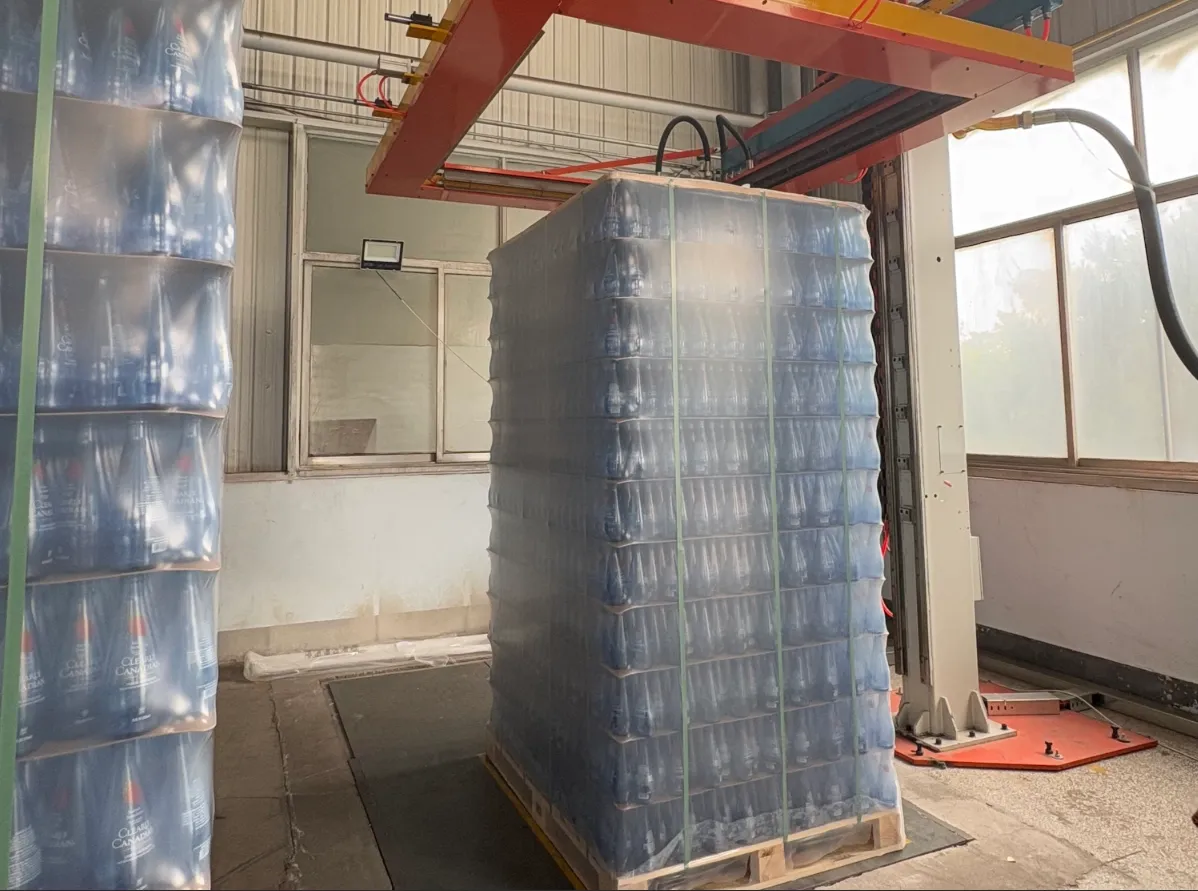
After final inspection and decoration, qualified glass bottles are packed according to the customer's packaging and transportation requirements.
Common packaging methods include:
Carton packing
Palletizing
Shrink wrapping
Container loading
Proper export packaging is important because glass bottles are fragile and may experience vibration, impact, and repeated handling during international transportation. Suitable packaging helps reduce breakage and ensures the bottles arrive safely at the customer's facility.
Final Inspection → Packing → Palletizing → Container Loading → Shipping
15. Frequently Asked Questions
A: How long does it take to manufacture glass bottles?
Q: For customized glass bottle needing new mould, it's usually takes 35-45 days to make the mould and physical samples and 45 days for bulk production.
A: How much does a custom glass bottle cost?
Q: The cost depends on factors such as bottle weight, capacity, design complexity, mold requirements, decoration, order quantity, packaging and shipping. A supplier normally needs project specifications before providing an accurate quotation.
A: What is the MOQ for custom glass bottles?
Q: For most custom glass bottle orders, our MOQ is 6,000 pieces per design. The exact MOQ may vary depending on the bottle design, glass color, decoration, and customization requirements.
A: Can I customize the shape of a glass bottle?
Q: Yes. Custom glass bottles can be developed around specific shapes, dimensions, embossing and other design requirements, subject to manufacturing feasibility.
A: Can I order bottles and closures from the same supplier?
Q: Yes. Combining bottles and closures can simplify compatibility and packaging development, especially for spirits and premium beverage projects.
Looking for Custom Glass Bottle Manufacturing?
Whether you need standard glass bottles or a completely custom bottle design, Bottle Pack Solutions can help you develop the right packaging solution for your product.
From bottle design and mold development to glass bottle manufacturing, quality inspection, decoration, and export packaging, we can support your project from concept to finished packaging.


